Financing new balconies for an owners’ association: budget, reserve fund and decisions
Financing new balconies does not begin with finding the bank that advertises the lowest monthly repayment. An apartment owners’ association or building manager must first know exactly what the building is buying, which related works are necessary and which risks remain unresolved. Only a complete technical scope can become a budget that is sensibly divided between the building repair fund, existing cash, increased contributions or external finance.
A sound decision protects the building from two opposite mistakes: an understated price that later fragments into variations, and an opaque contingency with no controls. This guide helps an association prepare a financial framework and explain it to owners. It does not replace legal, tax, accounting or credit advice for a particular building.
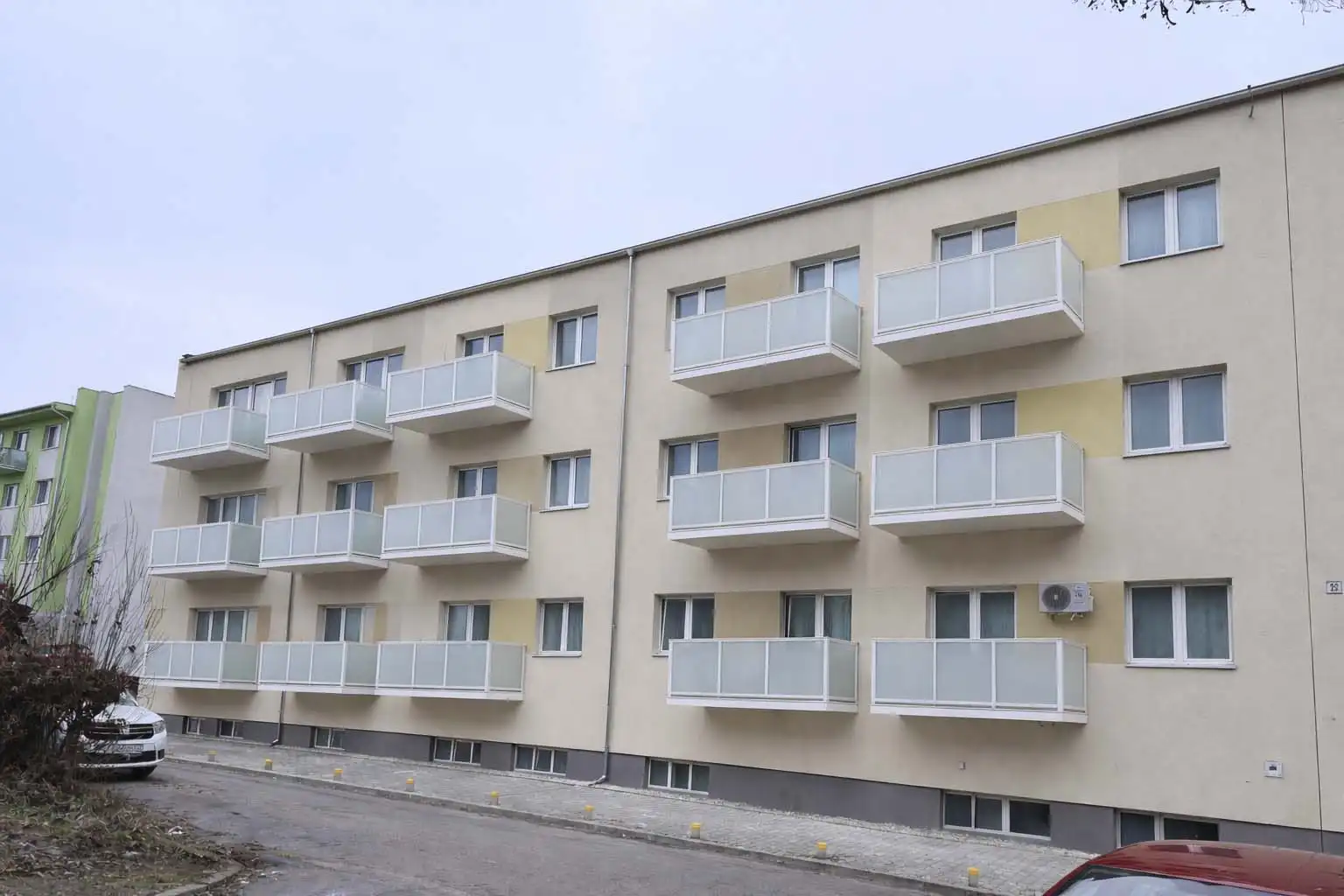
Define the investment before discussing finance
The budget must describe a defined result. A suspended balcony project might add balconies to a building that has none, replace unsuitable structures or form part of a larger refurbishment. The scope may include the aluminium frame, flooring, drainage, balcony railings, façade interfaces, alterations to openings, lifting equipment and documents. Until those boundaries are clear, comparisons between financing routes are only superficial.
Separate the core scope from options
Put everything required for a safe and functional result in the base option. List aesthetic or comfort enhancements separately, including their price and their effect on other works. Owners can then distinguish the essential technical solution from a discretionary improvement. This also prevents three different solutions from being discussed under the single label “new balconies”.
The complete budget is wider than the balcony supplier’s price
The manufacturer’s quotation is central, but the building budget may also need surveys, opening-up work, design, structural assessment, consent procedures, coordination with insulation, builders’ work, scaffolding or a crane, protection of the site, alterations to door openings and final making good. The exact list depends on the building and the contractual boundaries.
Give every cost an owner of responsibility
For every item, state who procures it, who prices it, which contract contains it and who confirms completion. If a bid uses the expression “turnkey balconies”, still request a precise schedule of inclusions and exclusions. The guide to comparing balcony quotations is a useful framework for distinguishing a shared item name from a genuinely comparable scope.
Contingency should follow risk, not instinct
There is no universal contingency percentage for every apartment block. A project with measured surveys, opening-up investigations and coordinated drawings carries different uncertainty from an early concept based only on photographs. The allowance should cover named risks, not automatically finance new requirements introduced after the owners’ decision.
Keep a simple uncertainty register
Record every open question, its potential financial effect and the point at which it must be closed. Examples include actual substrate condition, fixing zones, clashes with external insulation, balcony-door alterations, items mounted on the façade and access restrictions for lifting equipment. For each allowance, define who can authorise its use and what evidence is required. Any unused amount then remains the building’s money rather than becoming a hidden extension of the contract price.
The repair fund is a resource and a commitment to the whole building
The current Slovak Act No. 182/1993 on Slov-Lex regulates contributions to and use of the operation, maintenance and repair fund for operation, maintenance, repairs, renewal, modernisation and reconstruction. It also expressly addresses repairs to balconies, loggias and terraces that are common parts of the building. For new or substantially altered balconies, however, the association should verify the classification, approval process and governing documents for the particular project.
Do not consume the building’s safety margin in one project
The fund balance is not uncommitted cash with no competing obligations. The budget must also recognise the roof, lifts, services, façade, emergency repairs and contracts already signed. After balcony expenditure, the building needs reasonable operating liquidity. If the project would nearly empty the fund, owners should see how it will be replenished and how an unexpected defect would be paid for.
Compare more than one financing route
Depending on its position, an association may use cash in the fund, temporarily increase monthly contributions, request one-off contributions, borrow or combine sources. Each model has a different timing profile, total cost, administration and impact on households. Every comparison must use the same technical scope and implementation date; otherwise, the apparent winner may simply rely on a different assumption.
Verify current terms at the source
Bank offers, public programmes and support conditions change. If the building is considering a public renewal instrument, check eligible purposes, deadlines, security and required documents directly with the Slovak State Housing Development Fund or the relevant institution. Do not place a historical interest rate or an assumed grant in the owners’ decision until current written terms confirm that the particular balcony scope is eligible.
Translate the project into a monthly household impact
The total price is essential for contract control, but an owner also needs to understand the effect on their apartment. The model should show the preparation period, duration of higher contributions or repayments, monthly impact and total financing cost. Identify which figures come from binding offers and which remain working assumptions.
Prepare three genuinely comparable scenarios
A useful set may include a conservative option using more existing cash, a balanced combination of repair fund and finance, and a faster option using a larger external facility. For each one, show the opening fund balance, amount used, lowest projected balance, monthly impact, duration, interest and charges where applicable. Do not call an option “cheapest” merely because it has the lowest monthly repayment.
Cash flow must follow the construction programme
Even a fully financed project can stall when money is unavailable for a design payment, production deposit or installation invoice. Prepare a monthly schedule of income and expenditure from design through procurement and handover. Include finance approval time, payment milestones, tax, retention where agreed, contingency and the building’s other outgoings.
Link payment to evidenced progress
The contract should state what the contractor provides before each invoice: for example, approved documents, a completed production milestone, delivery to site, installed structures or a signed handover record. Compare the payment schedule with the balcony installation programme. This helps the association protect liquidity and avoid paying a large share without clear evidence of progress.
Compare bids in one common table
The lowest total on the last line does not necessarily mean the lowest cost to the building. One proposal may include design, transport and craneage while another leaves them to the client. Differences can also lie in flooring, drainage, finish, railings, façade interfaces, tests, documents and warranty.
Price ambiguities before the vote
Move every phrase such as “as required”, “by the client” or “excluded” into a separate schedule. Add an estimate, responsible party and deadline for confirmation. The article on suspended balcony prices can help owners understand cost drivers, but the final figure must come from a survey and building-specific scope.
Phasing has technical as well as financial boundaries
Splitting a project can reduce the immediate funding requirement, but not every split is economical. Design, approvals, production setup, scaffolding and lifting equipment have fixed costs that may be repeated. Each completed phase must remain safe, weather-protected, usable and capable of contractual handover.
Separate preparation from construction, not a functional system
It can be sensible to finance surveys, opening-up and design first so that the later construction budget becomes more accurate. It is less sensible to separate the supporting frame, floor, drainage and railing across unrelated periods without a designed strategy. Agree phasing with the designer and contractors, not only by looking at the current bank balance.
Owners need specific documents for a valid decision
All owners should receive the same information in good time: the need, technical option, bid comparison, complete budget, funding source, monthly effect, programme, principal risks and proposed resolution. If scope or finance changes, the current revision must be unmistakable.
Vote on change controls, not only on a ceiling
The decision should define who may sign the contract, up to what value, under which conditions contingency may be used and which changes must return to owners. The exact procedure and voting threshold must be checked against current law, the association or management agreement and the legal character of the project. The article for a building manager preparing new balconies summarises other useful preparation inputs.
Transparent communication reduces resistance and confusion
Owners do not share the same technical or financial knowledge. A one-page decision sheet should therefore explain in plain language what the building receives, why the work is proposed, what the price contains, the monthly effect, the fund balance after the project, open risks and the likely installation period. Detailed appendices should remain available for scrutiny.
Show the consequence of postponement as well
Deferral may allow more contributions to accumulate, but it can also create new design, pricing or safety risks. Do not use this as a threat, and do not describe postponement as free. Assess it with the same method as implementation: temporary measures, further investigation, price movement and the effect on coordination with façade or other planned repairs.
Checklist before the owners’ meeting
Before issuing the decision pack, confirm that the building has:
- a defined core scope and separately priced options,
- current photographs and surveys, or a plan to obtain them,
- comparable bids and a schedule of excluded items,
- a budget for design, building, logistics and making good,
- a risk register with rules for the contingency,
- a view of the repair fund and all other planned works,
- at least three financing scenarios with total and monthly effects,
- a cash flow aligned with contractual milestones,
- a proposed resolution checked for the particular building,
- a communication plan and named contact person.
Every number needs a date and source
For each budget, state the date, quotation validity, tax treatment, price source and responsible person. For interest or public support, record when and where the condition was verified. Owners can then distinguish a binding offer from an estimate and a risk allowance.
Frequently asked questions
Can new balconies be paid for from the building repair fund?
Slovak law allows the operation, maintenance and repair fund to finance building renewal, modernisation and reconstruction and also addresses repairs to balconies, loggias and terraces that are common parts of a building. The association or manager should verify the legal classification, approval procedure and use of funds against the current law and the building’s governing documents.
What percentage contingency should a balcony budget include?
There is no responsible universal percentage. The allowance should reflect unresolved risks such as surveys, design interfaces, façade condition, related trades and installation logistics. Every allowance should have a stated reason and an approval rule for its use.
Is it better to increase monthly contributions or take a loan?
That depends on the fund balance, other planned repairs, urgency, what households can afford monthly, and the price and conditions of finance. Owners should receive at least three comparable scenarios based on the same technical scope and showing the total impact.
What amount should the owners vote on?
They should not vote only on one contractor’s headline price. The decision should define the scope, funding source, maximum financial envelope, contingency, payment or repayment model and change-control rule. The required wording and voting threshold must be checked under current law and the building’s circumstances.
What should the association send HS ALUSYSTEM for a quotation?
Provide the number and approximate size of balconies, façade and access photographs, available drawings, information about insulation and balcony doors, the intended railing and floor scope, the desired programme and a contact person. Better inputs reduce pricing uncertainty.
Request a technical scope that supports the funding decision
Responsible financing is possible only when the budget reflects the real building and a comparable supply package. Review HS ALUSYSTEM references, then prepare balcony quantities, façade photographs, available drawings and the intended scope. Contact HS ALUSYSTEM to request a site visit, technical assessment and quotation that the association can place in a transparent financing scenario.