Aluminium balconies: reporting a defect and arranging repairs
Aluminium balconies may need a professional inspection or repairs to a particular component during their service life. Yet a building manager often receives little more than “something has come loose” and a photograph without an apartment number. A well-prepared report helps identify the location, symptoms and circumstances, agree a safe next step and arrange an inspection. Repairing aluminium balconies therefore starts with clear information, rather than ordering a replacement part from a picture.
This guide is for apartment owners and building managers. It explains how to report an observed defect, prepare supporting information and close out a repair. Any actual work must be based on the installed assembly and a professional assessment. For an overview of complete assemblies and project options, visit the main page for HS ALUSYSTEM suspended aluminium balconies.
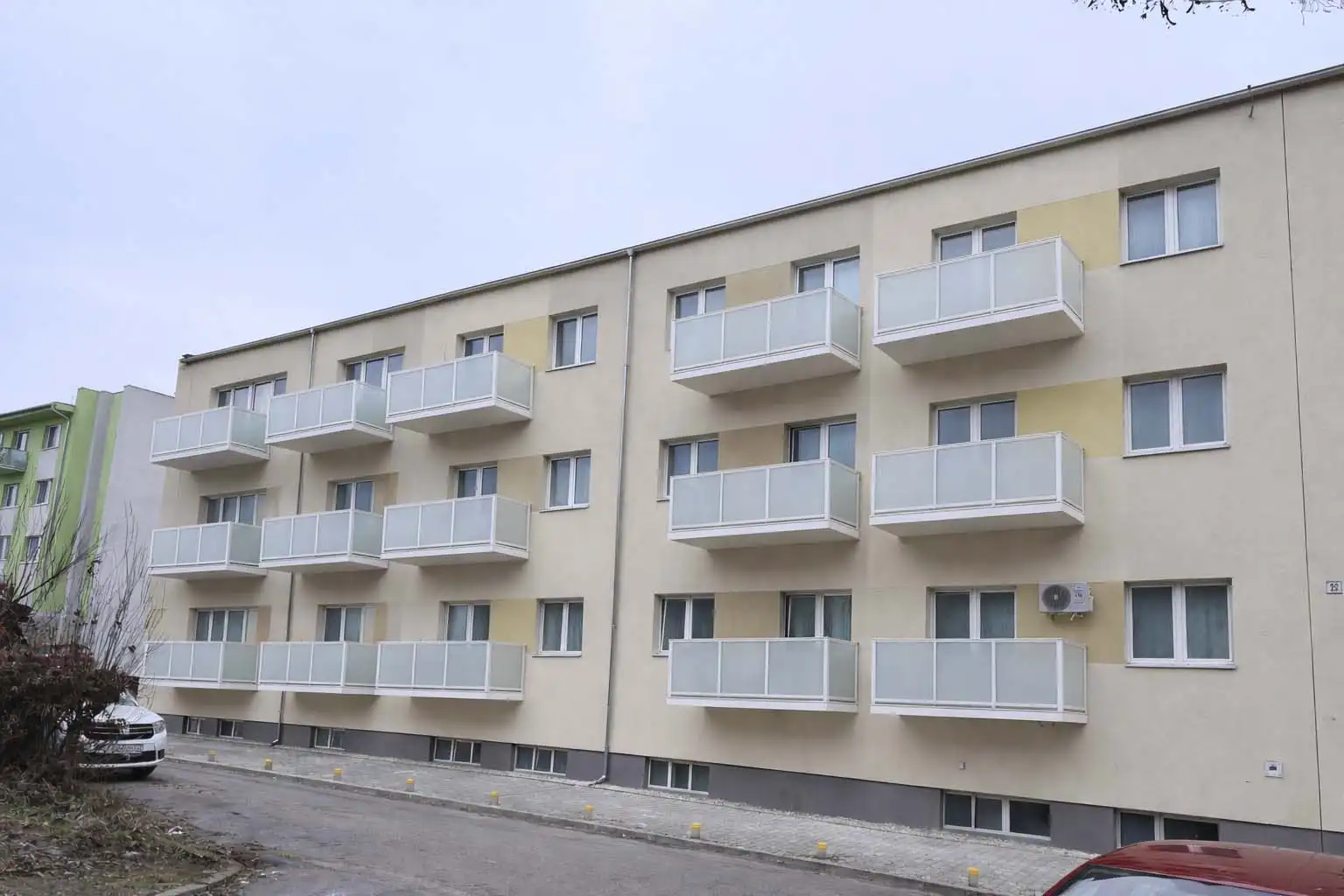
This photograph, from projects presented on the HS ALUSYSTEM website, shows completed balconies. It does not show a defect or repair work.
1. Restrict use first if there is a suspected danger
Taking a photograph must not compromise safety
If you notice a loose infill panel, damaged railing, unusual movement of the structure or a risk of a component falling, do not use the affected balcony. Inform the building manager and the responsible professional contact; contact the emergency services if there is an immediate danger. Also flag any potential danger to the area below. Do not approach the damaged location to get a better photograph.
Do not test the railing by pushing it, remove infill panels or tighten anchors yourself. An uncertain condition cannot be declared safe simply because the balcony is still standing or a photograph shows no obvious change. An appropriate professional must determine the necessary restrictions and conditions for further use.
2. Identify the balcony so an unfamiliar technician can find it
Use one consistent reference for each position
Include the address, entrance, floor and position on the façade. If the building uses references from drawings, handover records or a balcony register, copy them exactly. Explain the viewpoint used to define left and right. A resident’s name alone, or “the second balcony”, can lead to confusion.
Create a separate entry for each position when reporting several balconies. Record a similar symptom on three balconies as three observations linked to the same event, rather than as a confirmed common cause. The article on balcony handover and service records explains the documents used to identify an assembly.
3. Describe the symptom, timing and circumstances
Separate observations from your explanation
State what you actually noticed: a noise in windy weather, water near the door after rain, a visible gap or surface damage. Add the date it was first observed and whether it recurs or changes. If you did not see the cause, mark it as unknown. “The threshold is wet after rain” is a more accurate report than an unconfirmed conclusion about defective anchorage.
Relevant context includes recent façade work, door replacement, an impact or the installation of an accessory. Record these facts without assigning blame. If the problem occurs only in particular conditions, describe what has already happened. Do not try to reproduce it by pouring water, adding weight or moving components.
4. Prepare clearly organised photographs
An overview, location shot and close-up serve different purposes
From a safe, accessible position, photograph the overall balcony, the location of the affected area and a detail. If a necessary image would require leaning out or entering a hazardous area, say that it is missing. The technician can arrange a suitable inspection method. A photograph cannot establish a concealed support arrangement, material specification, bolt tightness or the cause of a defect.
Name files with the position reference and date, and add a short description to the message. Keep original images without filters. Arrows or notes can be added to a separate copy. Avoid unnecessary images of people, interiors or personal information. A short video is useful only if it safely records something already happening.
5. Find assembly information and records of earlier work
Identify missing documents instead of replacing them with guesses
Attach any available project reference, supplier details, installation year, relevant drawing and previous repair records. For an aluminium balcony, identification of the infill, seals, flooring and finish may all matter. You do not need to send the entire building archive: select documents relevant to the reported location and state their revisions.
If a component has been changed, explain who carried out the work, when and what it involved. Leave unknown details marked as unknown. Follow general aluminium balcony care guidance alongside the instructions for the actual assembly. Discovering a defect is not an instruction to repair a connection yourself.
6. Select replacement parts by compatibility
Similar appearance is not enough
Do not order an infill panel, seal or fixing solely by its external dimensions and colour. The particular system, support arrangement, required properties and adjoining parts also matter. The repair provider should determine what measurement and dismantling are necessary. Residents should not remove a component from the railing to bring it along as a sample.
For finish repairs, find the available colour, gloss and texture specification. A photograph on a screen is not an approved colour sample; RAL also recommends a physical sample for final colour decisions. Agree the repair method and expected appearance before work starts. Availability of an identical component, or an invisible local repair, cannot be promised without checking.
7. Agree the inspection and the scope of the repair quotation
A report may lead to a request for more information, an inspection or a proposed intervention. An initial response to photographs may not be a final diagnosis. Clarify what the visit is intended to establish, who will provide apartment access and which areas need checking. Related work on doors or the façade may require another trade.
In the quotation, distinguish diagnosis, replacement parts, transport, access equipment, the repair itself and verification of the result. Agree what happens if the inspection reveals more extensive damage. The information on pricing and preparing an enquiry helps with initial contact, but a repair price needs to be confirmed for the individual case.
Address any warranty assessment using the documents for the particular project and the findings. This guide does not determine warranty periods, entitlement or liability for damage. Do not assume either that the work will automatically be free or that every instance of damage removes all rights.
8. Arrange access without altering the structure
Agree a contact person, appointment, access through the apartment and any restrictions around the building. Move belongings only from safely accessible areas, following the agreed instructions. The contractor decides whether a platform, scaffold or other equipment is needed for the planned work. Residents should not improvise access from outside.
Preparations may differ from the original installation of aluminium balconies. Inform affected residents of the arrangements and make sure any restriction on use is not lost in an email chain. Having an appointment booked does not itself mean the balcony is safe until that date.
9. Use a concise reporting template
You can copy the following list into a message to the building manager or supplier. Enter verified information and mark anything unknown. If danger is suspected, do not wait until every item has been completed.
- Building and position: address, entrance, floor, balcony reference and viewing direction.
- Observed symptom: what can be seen or heard, without guessing the cause.
- Timing and circumstances: first observation, recurrence, weather and recent work.
- Current use: whether the balcony is being used and what restrictions have been communicated.
- Supporting information: photographs, relevant drawing, project reference and earlier work.
- Contact and access: responsible person, apartment availability and known restrictions.
- Requested next step: acknowledgement, instructions on use and arrangements for assessment.
The manager can assign a reference number and keep all subsequent communication under it. Date any new photograph or observation without retrospectively rewriting the original description. This preserves what was known when the inspection was requested and what emerged afterwards.
10. Close the repair with a verified result
After the work, obtain a record of what was done, which parts were used, the inspection outcome and any remaining restrictions. If the assembly has changed, retain the relevant approved documents as well. A photograph of a finished surface alone may not demonstrate that the original problem has been resolved.
For an intermittent symptom, agree how and when the outcome will be checked and whom to contact if it returns. Resuming use must follow the appropriate professional assessment. The article on the service life of aluminium balconies explains repairability in the context of the complete assembly.
Frequently asked questions
Are photographs enough to commission a repair?
They help with an initial assessment but may not reveal the cause or concealed components. The supplier should confirm whether an inspection or further information is needed before proposing work.
Can I tighten a loose connection myself?
Do not alter anchors or structural connections on your own initiative. Report the finding to the manager and a professional; the required method depends on the particular detail and condition.
Does damaged infill mean replacing the entire balcony?
Not automatically. The affected component, its support arrangement and related parts need assessment. Verified compatibility and the extent of the defect determine whether a component can be replaced.
What if we do not know the original supplier?
Gather the available documents, address and photographs taken safely. Ask whether a professional assessment can be arranged; do not assume that replacement parts or a repair service will be available.
When is a repair report closed?
When the work is recorded, the result has been verified and the conditions for use are clear. Unresolved items and agreed follow-up checks must remain on record.
Send HS ALUSYSTEM the information about your balcony
For an existing assembly, prepare its reference, a description of the problem and the available documentation. For a new project, discuss service communication and component identification during design. HS ALUSYSTEM project references show completed installations.
Contact HS ALUSYSTEM to agree the next step for your building. The feasibility, scope, timing and price of any work need confirmation based on the information and actual findings.